

Investigate · Treat · Repair · Finish
Damp Proofing Polop
Damp proofing for Polop — the old village beneath the castle hill, the villa urbanisations below it, and the damp each of them produces.
Polop sits inland, gathered beneath its castle hill, and a good share of what we are called to here is condensation rather than water coming through the building.
That is not really about altitude. It is about the buildings: heavy stone houses with a lot of thermal mass, a fair number of them second homes, heated hard for a few days and then left cold for weeks.
Alongside that, the old village is stone houses on steep streets, and the urbanisations below bring the usual villa work.
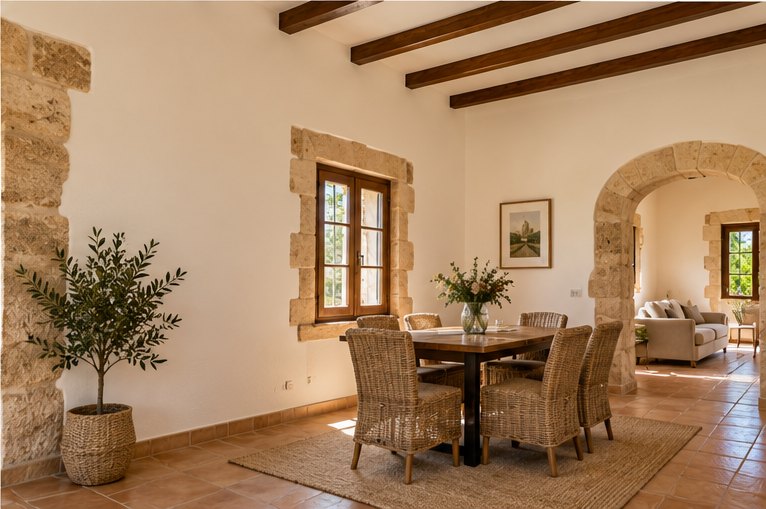
Winter condensation
Cold Surfaces, Intermittent Heating
Condensation is a relationship between moisture in the air and the temperature of the surface it lands on. Lower that surface temperature and you get condensation at a humidity level that would have been harmless before.
A heavy stone or masonry wall takes a long time to warm up and a long time to cool down. Heat a room like that for a weekend and the air warms quickly while the wall barely moves — so the warm, moist air meets a surface that is still cold, and condenses on it. Turn the heating off and go home, and the moisture stays.
That pattern, rather than anything about height above sea level, is why intermittent heating in an old village house can make matters worse rather than better.
The signs are the familiar ones: mould in ceiling corners, around window reveals, on north-facing external walls and behind furniture standing against them. What it needs is ventilation and attention to the cold surfaces, not a chemical damp treatment.
The old village
Stone Houses on Steep Streets
The houses beneath the castle are old, built into the slope, and mostly terraced with party walls either side. Rear walls against rising ground, no damp proof course and thick masonry that holds moisture are all normal.
Those walls generally need to be able to let moisture evaporate. Coating them with something impermeable, inside or out, tends to relocate the problem rather than remove it — a common and expensive mistake on old property in this area.
Villas
Underbuilds and Retaining Walls Below the Village
The villa plots on the slopes below Polop produce the same lateral damp work as the rest of this hillside: lower levels and garages set into the ground, retaining walls with soil against their buried faces, and water coming through sideways.
Tanking, drainage improvements and the making good afterwards are the usual combination.
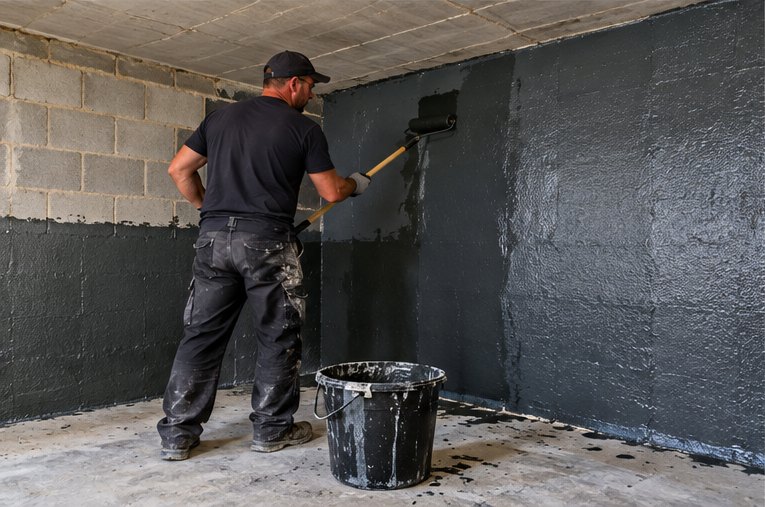
How it works
How a Damp Survey in Polop Works
In an old Polop house the question we usually ask first is how it is heated. A property warmed in short bursts and left cold in between behaves very differently from one held at a steady temperature, and that alone explains a good deal of the mould we are shown.
From there we say what we think is causing it and recommend something proportionate — occasionally a smaller job than expected. Diagnosis → Treatment → Repair → Finishing, with the replastering and decorating afterwards part of the same job. The survey and the quotation cost you nothing, and the work is guaranteed.
Questions
Damp Proofing Polop — Common Questions
Why is the mould in our Polop house worse in winter?
Because condensation depends on how cold the surface is. A heavy stone wall warms slowly, so in a house heated in short bursts the air warms while the wall stays cold, and moisture condenses on it. Intermittent heating can make it worse rather than better.
Can you treat damp in an old stone house in the village?
Yes. The important part is assessing how the wall is actually built. Old masonry usually needs to be able to let moisture evaporate, so an impermeable coating can move the problem rather than solve it.
Is condensation something you can actually do anything about?
Yes, but it is a different job from damp proofing. It is about air movement and the temperature of the surfaces the moisture is forming on. Treating it as rising damp does not work, which is why the survey separates the two first.
Across the area
Damp Proofing in the Surrounding Towns
Polop is one of nine towns with its own damp proofing page. The main Damp Proofing Costa Blanca page covers every treatment in full.
Damp Proofing Calpe
Damp surveys, waterproofing and remedial building work in Calpe and the surrounding area.
View Calpe →Damp Proofing Altea
Damp surveys, waterproofing and remedial building work in Altea and the surrounding area.
View Altea →Damp Proofing Benidorm
Damp surveys, waterproofing and remedial building work in Benidorm and the surrounding area.
View Benidorm →Damp Proofing La Nucía
Damp surveys, waterproofing and remedial building work in La Nucía and the surrounding area.
View La Nucía →Damp Proofing Finestrat
Damp surveys, waterproofing and remedial building work in Finestrat and the surrounding area.
View Finestrat →Damp Proofing Villajoyosa
Damp surveys, waterproofing and remedial building work in Villajoyosa and the surrounding area.
View Villajoyosa →Damp Proofing Alfaz del Pi & Albir
Damp surveys, waterproofing and remedial building work in Alfaz del Pi & Albir and the surrounding area.
View Alfaz del Pi & Albir →Damp Proofing Callosa d'en Sarrià
Damp surveys, waterproofing and remedial building work in Callosa d'en Sarrià and the surrounding area.
View Callosa d'en Sarrià →Get in touch
Damp, Mould or Water Coming In — in Polop?
If you have damp, black mould, peeling paint, blown plaster or a musty smell that keeps coming back in a Polop property, we will come and look at it and tell you what we think is causing it.
Villa, finca, town house, apartment or underbuild.
More from Dragon Reforms
Other Services in Polop
Everything Dragon Reforms does in Polop, each with its own page.
- Property Renovations Polop
- Kitchen Renovations Polop
- Bathroom Renovations Polop
- Villa Renovations Polop
- Apartment Reforms Polop
- Finca Renovations Polop
- Builders Polop
- Terrace Renovations Polop
- Plumbing Services Polop
- Electrical Services Polop
- Carpentry Services Polop
- Painting & Plastering Polop
- Windows & Doors Polop
- Air Conditioning Polop
- Disability Living Polop
Get a quote
Get Your Free Damp Survey and Quotation
Tell us where the damp is and what the property is. We cover Polop and the surrounding north Costa Blanca, and the survey and quotation cost you nothing.
- Phone
- 0034 639917798
0034 669261858 - +34 639 91 77 98
- dragonreforms@gmail.com
- Address
- Calle San Isidre No 8, Pl 1 Dr
03510 Callosa de Ensarrià, Alicante - Hours
- Monday to Saturday, 9am–8pm